



The challenge in metastatic colorectal cancer

Despite advances in systemic therapy, treatment efficacy in mCRC remains suboptimal. Standard regimens (e.g., fluoropyrimidine + oxaliplatin and/or irinotecan, often combined with targeted agents) still leave a substantial fraction of patients without meaningful benefit—while exposing them to toxicity and consuming valuable time. Additionally, attrition rates for new agents in mCRC are higher than in other indications.

Key challenges for drug discovery and translational teams include:

  • High inter-patient variability in response to standard-of-care and investigational agents
  • Limited predictive biomarkers for chemotherapy response (genomics alone often isn’t enough)
  • Tumor heterogeneity and acquired resistance, especially across metastatic sites
  • Need for faster, more confident preclinical prioritization of compounds and combinations

Organoids as a functional solution for mCRC drug screening

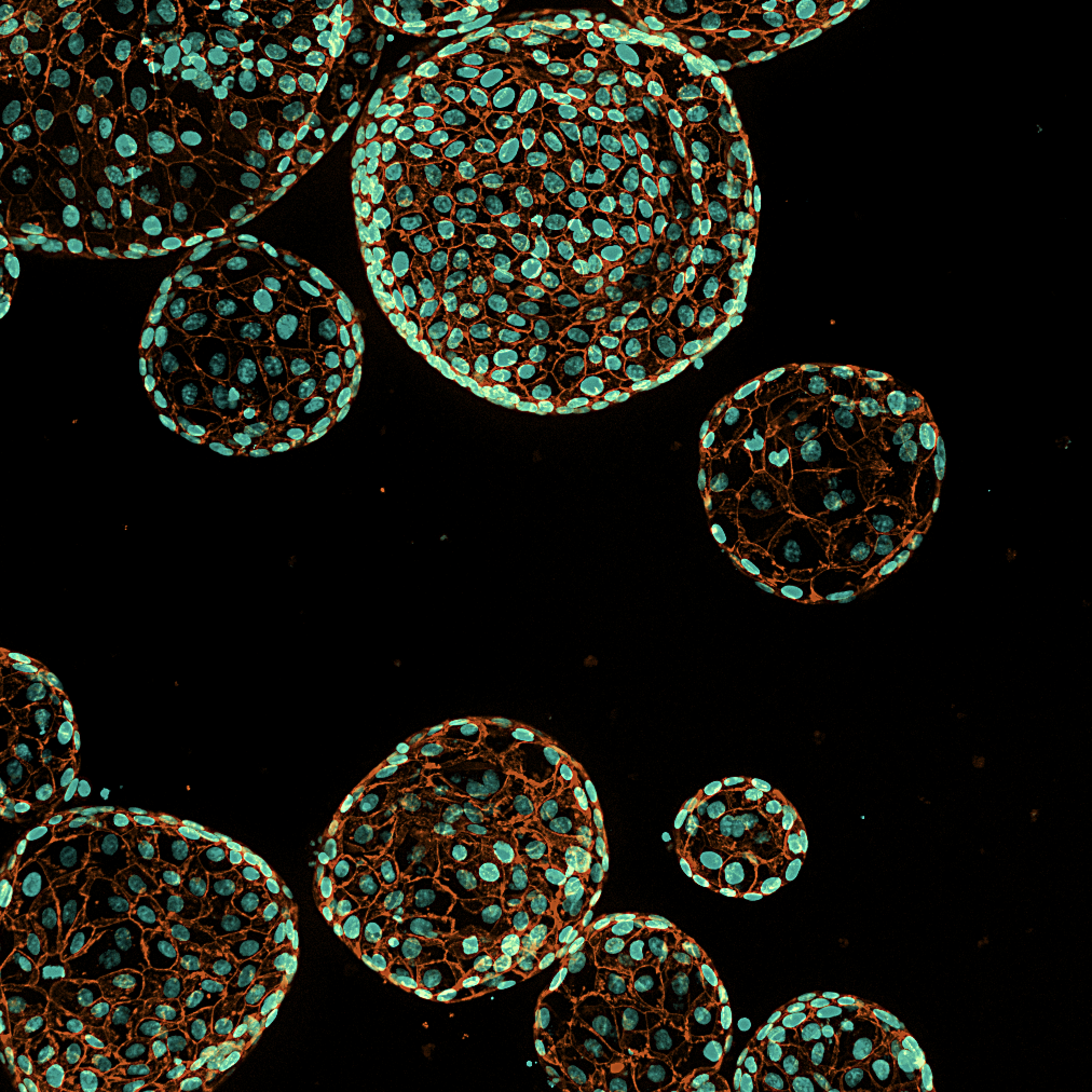
Patient-derived organoids capture key biological and genomic features of the original tumor and can be used for functional drug sensitivity testing. This allows you to evaluate compound activity in a model that is closer to patient biology than conventional cell lines—supporting:

  • Compound ranking and MoA validation
  • Combination testing and resistance exploration
  • Translational stratification strategies (who is likely to respond vs. not)

PROOF OF CONCEPT

PDOs predict patient response in mCRC

OPTIC trial: A large prospective study provides strong evidence that PDO drug response can reflect clinical outcomes in mCRC. Patients underwent metastatic biopsies for PDO establishment prior to systemic therapy. PDOs were screened with a multi-drug panel and compared to patient response.

Highlights:

  • PDO drug sensitivity correlated with response of both the biopsied lesion and overall target lesions.
  • High predictive performance was reported for 5-FU and oxaliplatin screens (PPV ~0.78; NPV ~0.80; AUROC up to ~0.88, depending on endpoint).
  • PDO response was associated with progression-free and overall survival, supporting clinical relevance beyond response categorization.

Takeaway: PDO-based screening can help identify (in)effective therapies and strengthen confidence in translational decisions.

read more

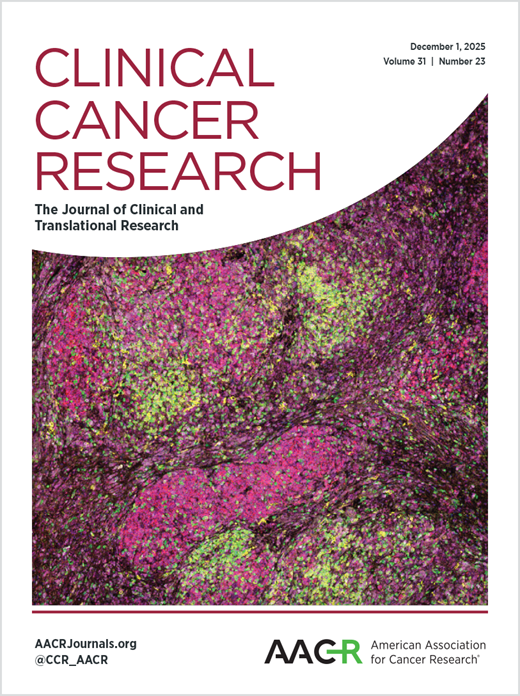
“Patient-Derived Organoids Predict Treatment Response in Metastatic Colorectal Cancer” (Clin Cancer Res, 2025)

Screening setup

We offer a practical screening setup designed for discovery and translational teams working in mCRC.

Model systems

  • A panel of well characterized mCRC organoids PDOs derived from responder, non-responder and partial responders with proven correlation of in patient – in PDO response to standard of care treatment
  • Normal organoids for selectivity context

Assay readout

  • Cell viability

What you receive (typical deliverables)

  • Dose–response curves and IC50 values per model/compound
  • Comparative response overview across models (sensitivity distribution)
  • Summary interpretation to support compound ranking and next-step decisions

Screening packages

Choose the package that matches your stage and question:

Lead identification

3 models, up to 500 compounds (triplicates, 1 concentration)

Best for early discovery triage and identifying hits across a small, focused model set.

Lead optimization

14 models, up to 5 compounds or 3 combinations

Best for testing lead candidates across broader biological diversity and identifying responder/non-responder patterns.

Efficacy + Safety evaluation

22 mCRC + 6 normal models, up to 2 compounds or 1 combination

Best for translational confidence: activity across a larger mCRC set plus normal-PDOs to identify off-target and off-tumor liabilities.

enroll now

HUB Organoids extends partnership with Molecular Devices to advance automated intestinal organoid screening technology

Replicate the success of our customer Merus:

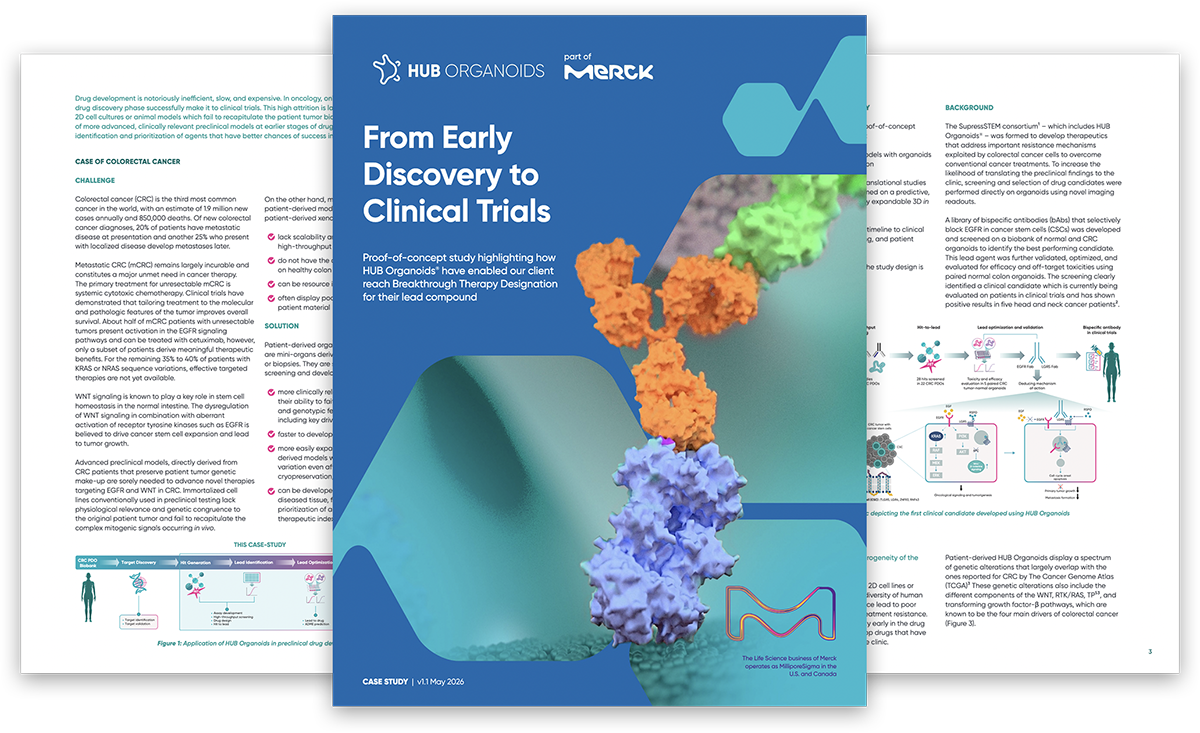
CASE STUDY

Drug discovery to clinical trials in five years

Download the case study

Why HUB Organoids

Deep expertise in adult stem cell–derived organoid technology

Robust QC and reproducibility focus

Screening experience across oncology programs and modalities

Access to diverse patient-derived models and translational know-how

Resources

KRAS Inhibitor Testing Solutions with Patient-Derived Organoids

Clinically-relevant models to test efficacy and study resistance mechanisms

read more

Patient-Derived Organoids Predict Treatment Response in Metastatic Colorectal Cancer

Accurately predicting treatment response in metastatic colorectal cancer (mCRC) is critical to avoid unnecessary toxicity and improve patient outcomes.

read more

Case Study: Drug discovery to clinical trials in five years

Proof-of-concept study highlighting how HUB Organoids can be used to accelerate your preclinical drug development timeline to just about five years.

read more

Ready to design your mCRC screen?

Tell us your compounds, intended MoA, and the key decision you need to make (ranking, combination selection, resistance, stratification). We’ll propose the most efficient screening plan and model selection.
X

Have any questions?

contact us