
PROOF OF CONCEPT
From Early Discovery to Clinical Trials
HUB Organoids’ KRASmut models supported development of the first clinical candidate advanced using organoid technology, in head & neck cancer.
HUB Organoids provides mutation-specific panels drawn from a biobank of over 50 patient-derived organoids carrying clinically relevant KRAS driver mutations. Each panel is assembled by confirmed mutated allele and indication to support efficacy testing, combination optimization, and resistance characterization in models that preserve patient tumor biology.
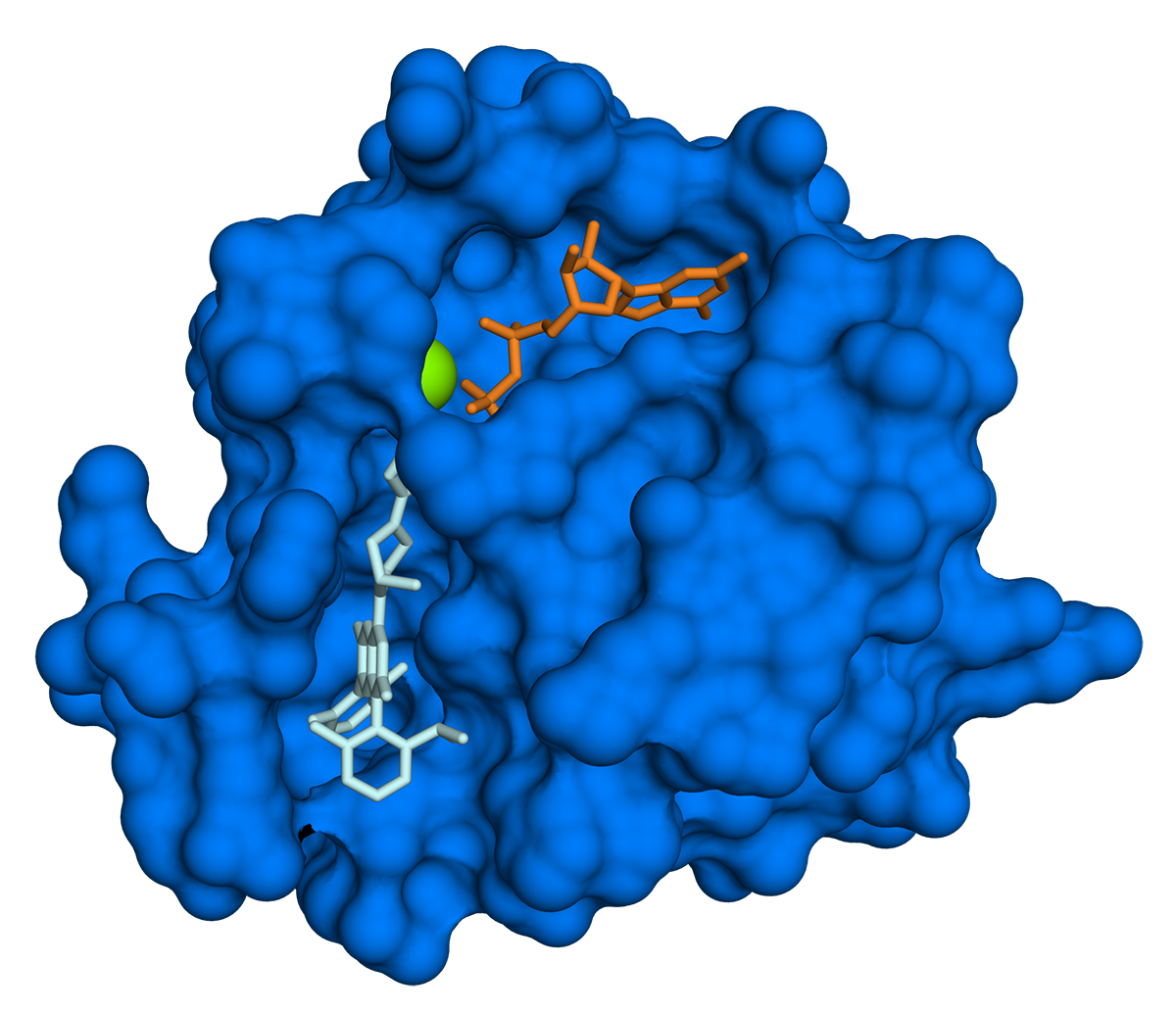
The development of a next-generation inhibitor that can hold up as a monotherapy where the first generation could not, and the identification of a more effective combination partner requires preclinical systems that retain the complex mutation background, tissue context, and adaptive signaling capacity of patients, which underly these clinical challenges. Conventional 2D cell lines do not preserve these features, and allele- and indication-specific questions require sufficient model depth within a single mutation.
PRESET – FOR BREADTH OF COVERAGE
A recurrent, high-throughput screening platform of 25 PDOs spanning clinically relevant KRAS mutations, designed for rapid, cost-effective evaluation of pan-KRAS inhibitors with standardized, comparable output across indications.
CUSTOM SELECTION – FOR DEPTH WITHIN ALLELE
Allele-resolved panels providing model depth within a single mutation across the indications in which it occurs, designed for programs anchored to a defined mutation that require combination optimization, responder stratification, or resistance characterization.
PROOF OF CONCEPT
HUB Organoids’ KRASmut models supported development of the first clinical candidate advanced using organoid technology, in head & neck cancer.
Studies may be configured using the preset KRASmut PDO Screen, a single mutation-specific panel, or a combination of both. Model selection is defined in consultation with our scientific team.
Your translational question: Can G12D inhibition be extended beyond pancreatic cancer, and which combination partner enables it?
Study types HUB Organoids can execute in this panel:
Data delivered: 10-point dose-response curves per compound per model, IC50 determination, IC50 heatmaps, and underlying image-based viability data, with per-model sequencing data available for interpretation.
Best for: combination strategy development, stratification hypothesis generation, indication selection.
Your translational question: Can my next-generation compound achieve monotherapy activity in colorectal cancer, and which combination partner is justified?
Study types HUB Organoids can execute in this panel:
Data delivered: 10-point dose-response curves per compound per model, IC50 determination, IC50 heatmaps, and underlying image-based viability data.
Best for: next-generation G12C inhibitor positioning, colorectal combination rationale, comparative differentiation packages.
Your translational question: In which indication does a G12V-directed or pan-RAS agent demonstrate the widest therapeutic window?
G12V accounts for approximately 30% of KRAS-mutant pancreatic cancer and is the second most prevalent KRAS allele, with no selective inhibitor currently approved. Development activity is concentrated in pan-RAS, PROTAC, active-state, and immunotherapeutic approaches. G12V has additionally been reported as an acquired resistance allele in patients progressing on G12C inhibitors, extending the relevance of these models to G12C programs.
Study types HUB Organoids can execute in this panel:
Data delivered: 10-point dose-response curves per compound per model, IC50 determination, IC50 heatmaps, underlying image-based viability data, and cross-indication comparison across all four tumor types.
Best for: G12V-selective, pan-RAS, PROTAC, and active-state inhibitor programs; first-in-class indication strategy.
Your translational question: Does compound coverage extend beyond the three dominant G12 variants?
Rare G12 alleles including G12A, G12S, and G12R are individually infrequent but collectively substantial, and constitute the test of pan-KRAS and pan-RAS coverage claims. G12R exhibits distinct biochemical behavior relative to other G12 variants. These alleles are commonly excluded from commercially available panels.
Study types HUB Organoids can execute in this panel:
Data delivered: 10-point dose-response curves per compound per model, IC50 determination, IC50 heatmaps, underlying image-based viability data, and an allele-resolved coverage profile.
Best for: pan-KRAS and pan-RAS breadth substantiation, partnering and regulatory documentation, rare-allele inclusion criteria.
Your translational question: Is compound activity dependent on mutation position within the P-loop?
G13D occurs predominantly in colorectal cancer and has a long-examined relationship to anti-EGFR benefit. Codon 13 mutants occupy a distinct biochemical regime from codon 12, with altered intrinsic nucleotide exchange and GAP sensitivity. G13C, as a cysteine mutant at an alternative position, is of specific interest for covalent chemistry developed against G12C. Patient-derived organoids carrying G13 alterations are scarce commercially.
Study types HUB Organoids can execute in this panel:
Data delivered: 10-point dose-response curves per compound per model, IC50 determination, IC50 heatmaps, underlying image-based viability data, and direct comparison against codon 12 models on request.
Best for: covalent selectivity characterization, undrugged allele exploration, colorectal anti-EGFR combination rationale.
Your translational question: Does compound mechanism retain activity outside the switch-II pocket?
Q61 mutations reside in the catalytic machinery rather than the switch-II pocket targeted by the majority of approved and clinical-stage KRAS inhibitors, impairing GTP hydrolysis through a distinct mechanism. Activity in Q61 models therefore constitutes direct evidence of pocket independence. Codon 61 alterations have additionally been reported among acquired resistance events in patients treated with G12C inhibitors.
Study types HUB Organoids can execute in this panel:
Data delivered: 10-point dose-response curves per compound per model, IC50 determination, IC50 heatmaps, underlying image-based viability data, and three-indication comparison separating allele from tissue effects.
Best for: pan-RAS and active-state inhibitor validation, mechanism characterization, breadth assessment beyond the switch-II pocket.
| Mutation | Total PDOs | Colorectal | Pancreatic | Head & neck | Lung | Ovarian |
|---|---|---|---|---|---|---|
| G12D | 20 | 13 | 6 | – | – | 1 |
| G12V | 12 | 7 | 2 | – | 1 | 2 |
| G12C | 7 | 7 | – | – | – | – |
| Other G12 variants | 6 | 4 | 1 | 1 | – | – |
| Q61 variants | 6 | 3 | 2 | – | – | 1 |
| G13D | 2 | 2 | – | – | – | – |
| G13C | 1 | 1 | – | – | – | – |
