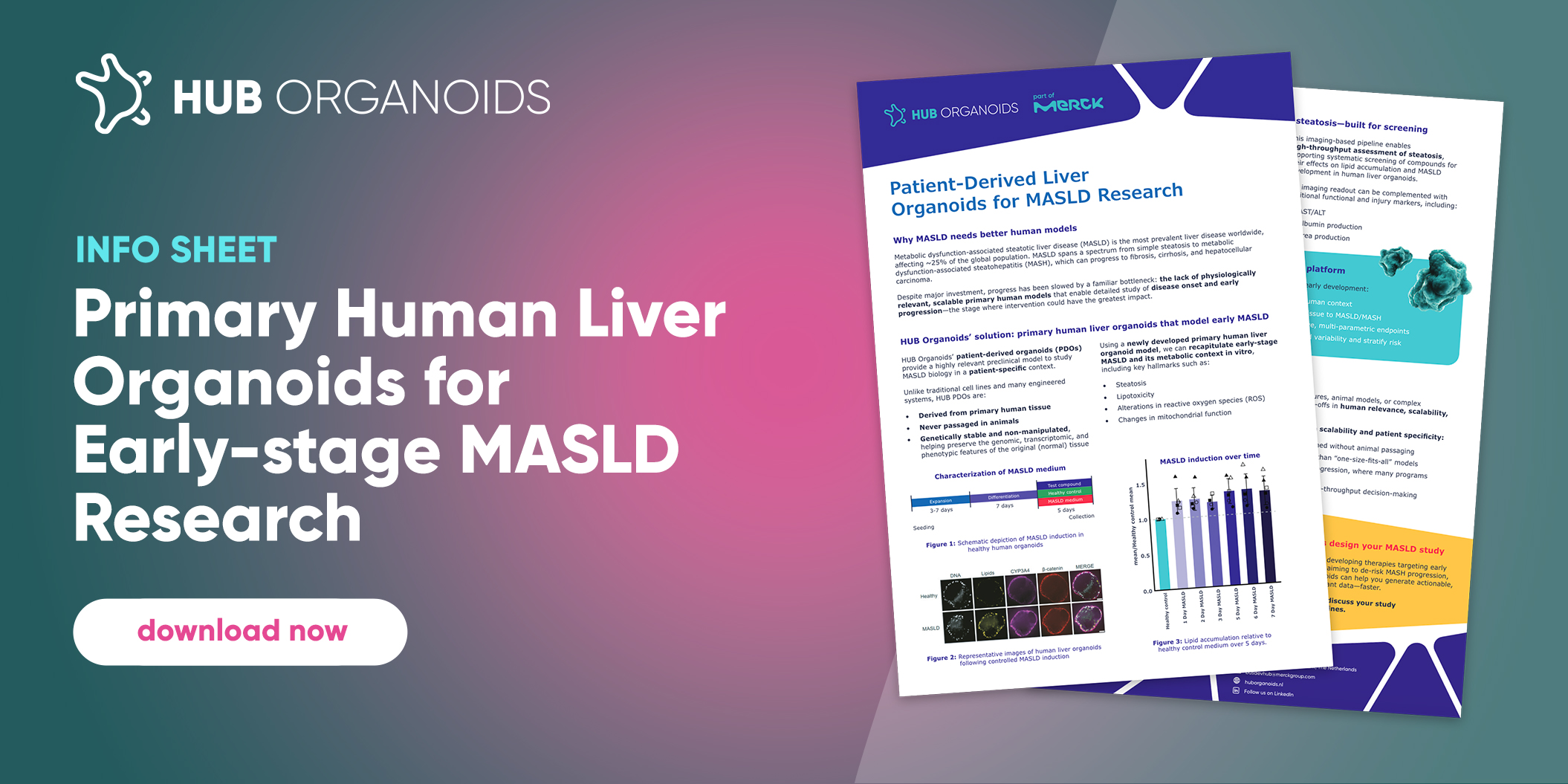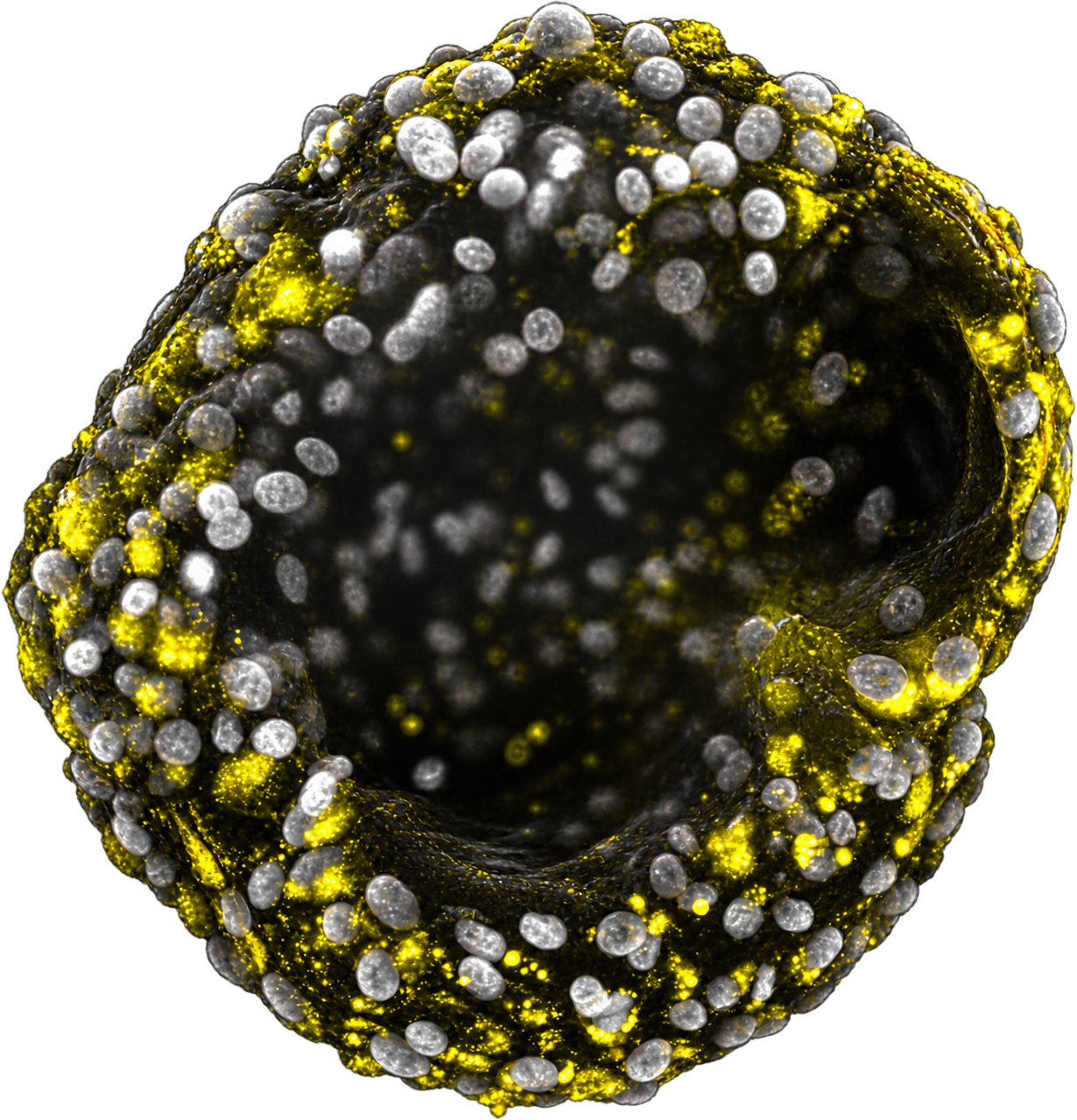
Our patient-derived liver organoid model reproduces the key hallmarks of early disease, including steatosis, lipotoxicity, and altered reactive oxygen species and mitochondrial function. Paired with a quantitative, imaging-based readout of steatosis, it lets you interrogate disease mechanisms and measure the effect of target modulation in a human system — before committing to animal studies or a clinical program.
Simple steatosis is where intervention has the greatest potential and the least data. Our primary human liver organoids capture the earliest steps of lipid accumulation and lipotoxic stress in the metabolic context in which they occur, giving you a window into disease onset rather than end-stage pathology. Because the models are donor-derived, findings carry the genetic and physiological diversity of real patients.
We developed a quantitative imaging pipeline that measures lipid accumulation organoid by organoid, alongside readouts for reactive oxygen species and mitochondrial function. The result is a mechanistically interpretable profile instead of a single endpoint — so you can tell a genuine anti-steatotic effect from a viability artifact, and follow the mechanism behind the signal.
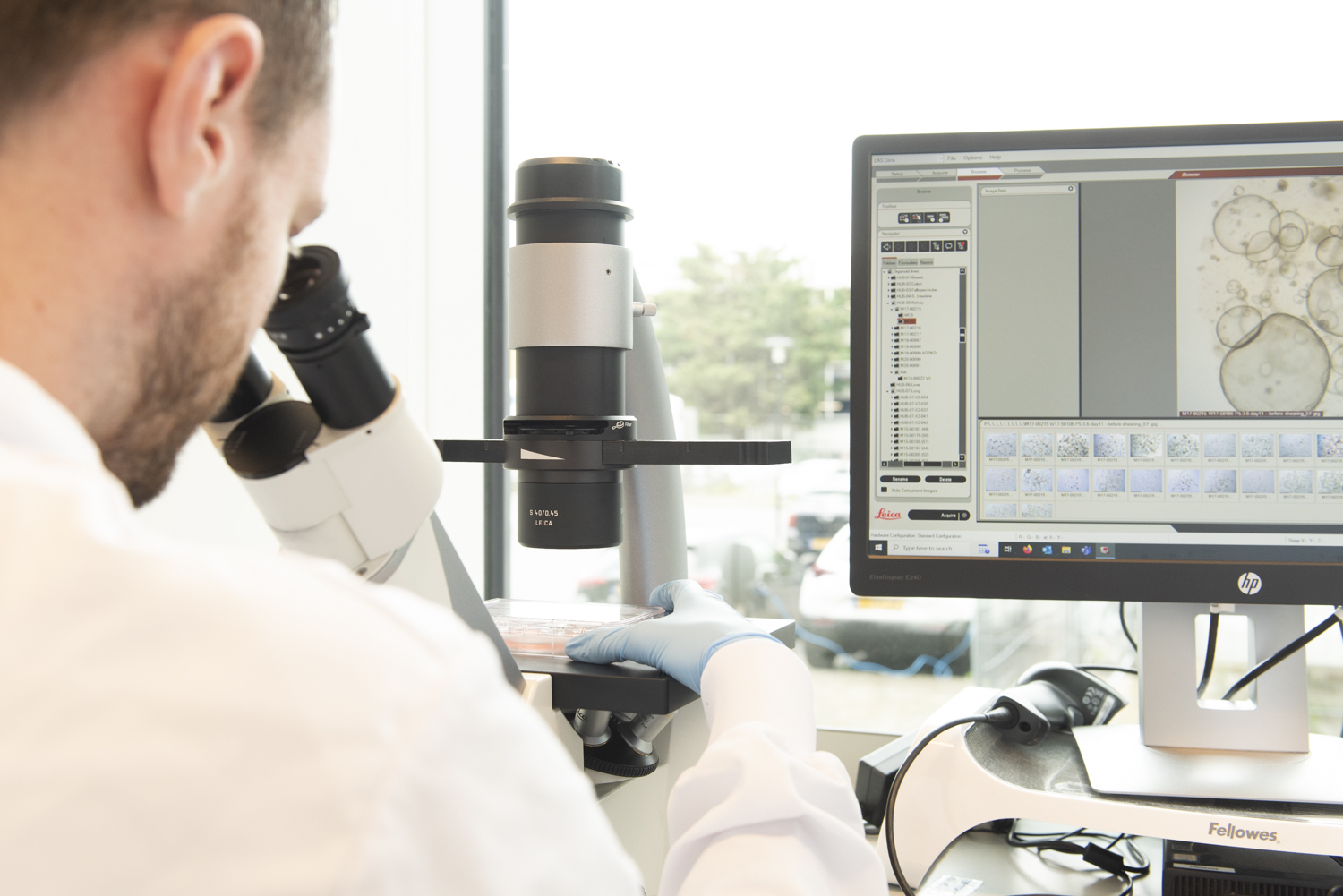
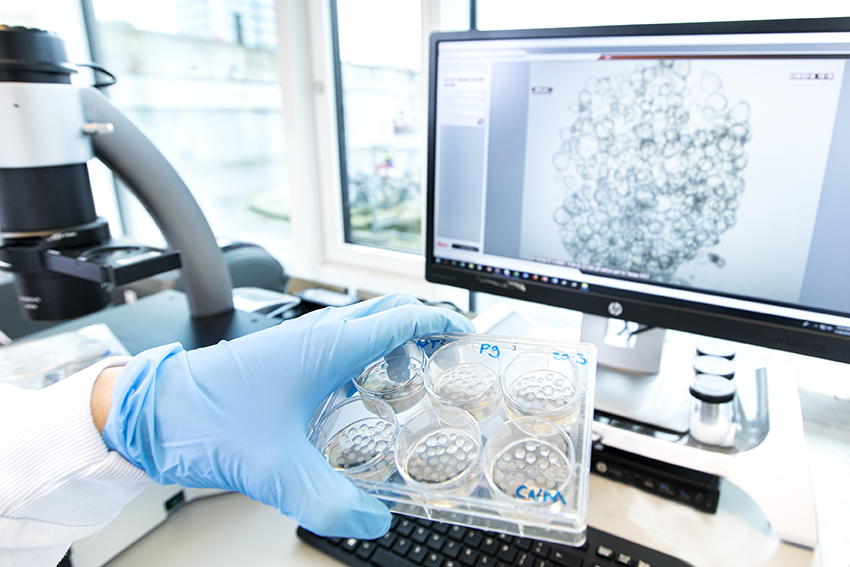
The imaging pipeline is built for throughput. Screen compound sets systematically for their impact on hepatic lipid accumulation, rank candidates on dose-response, and prioritize the assets worth advancing. The same platform supports mechanistic follow-up on the hits it produces, keeping discovery and validation in one human-relevant system.
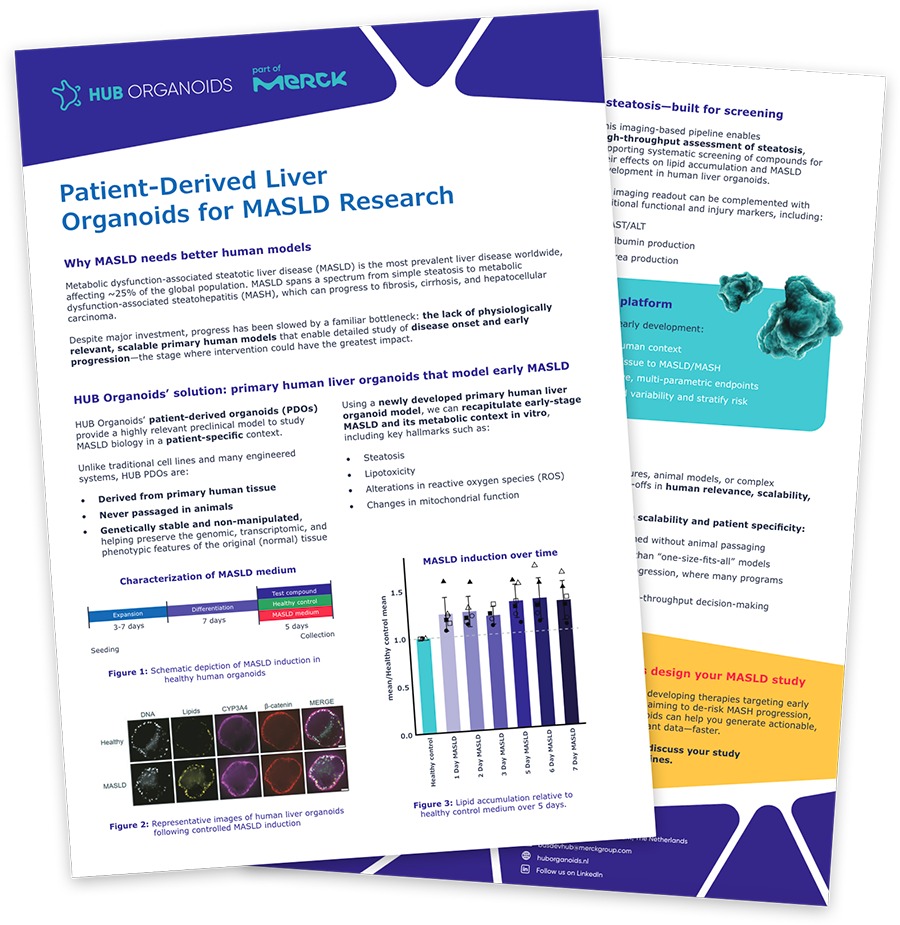
Using this platform, we identified two previously unreported druggable targets associated with MASLD and confirmed their dysregulation in patient cohorts. The work demonstrates the full arc the system is designed for: mechanistic investigation in human organoids, quantitative imaging to test target modulation, and translation back to patient data.
ON-DEMAND SLIDES